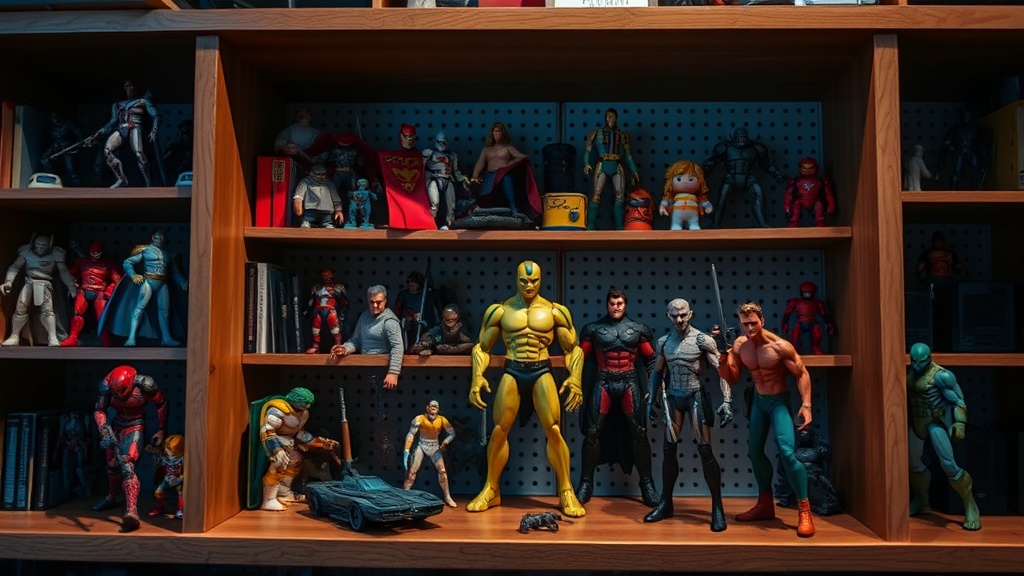
What Happens to Your Figures When You Run Out of Shelf Space?

The average McFarlane collector owns between 50 and 200 figures—and displays roughly 30% of them at any given time. That leaves hundreds of dollars in collectibles sitting in closets, storage bins, or (heaven forbid) garage boxes where temperature swings and dust do slow damage. This guide covers rotation systems: practical methods for cycling figures between display and storage without wear, lost accessories, or the dreaded "out of sight, out of mind" phenomenon that leads to forgotten purchases.
Rotation isn't just about space management—it's about appreciation. A figure you haven't seen in six months hits different when it returns to your shelf. Your brain actually processes familiar objects differently after absence, which means that Batman: The Dark Knight Returns figure you boxed up in January will genuinely feel fresh when you pull it out next month. But doing this wrong—shoving figures into whatever container's handy—leads to scuffed paint, misplaced weapons, and the creeping anxiety that damages the hobby itself.
How Should I Prepare Figures Before Rotating Them Into Storage?
Preparation starts with documentation. Before any figure leaves your display, photograph it—front, back, accessories laid out beside the figure. This isn't paranoia; it's insurance against the inevitable "wait, did this come with a second sword?" moment six months later. Use your phone, keep a dedicated album, and name files clearly: "Spawn_7_Deluxe_March2025.jpg" beats "IMG_4829" when you're searching later.
Cleaning comes next—and "clean enough for the shelf" isn't "clean enough for the box." Compressed air gets surface dust, but storage demands deeper attention. Use a soft makeup brush (unused, obviously) for crevices, particularly around McFarlane's notoriously detailed sculpts where dust settles like sediment. For figures with cloth elements—capes, soft goods—check for oils from handling. A barely-damp microfiber cloth, almost dry, handles this. Let everything sit for an hour before boxing; trapping moisture is how you get mildew.
Accessories need separate containment. Ziploc bags work in a pinch, but they create static that attracts dust and can stick to painted surfaces over time. Better options: small craft organizers with individual compartments, or—my preference—miniature coin envelopes (2.25" x 3.5") that you label with the figure name. Store these envelopes in a single larger container, not scattered among their respective figures. Why? Because you'll eventually want to display that figure without its full accessory loadout, and hunting through six storage bins for one alternate hand ruins the rotation experience.
What's the Best Way to Store Figures Long-Term Without Damage?
The container question splits collectors into religious factions. Original packaging—if you saved it—offers the safest environment. McFarlane's clamshells and window boxes were designed for shipping, which means they handle stacking reasonably well. But most of us didn't save every box, or we bought loose figures secondhand. For these, plastic storage totes are standard, but with caveats.
Avoid opaque bins unless you're meticulously organized. Clear containers let you see contents without opening, which matters more than you'd think. That "miscellaneous figures" tub you plan to sort "later" becomes a graveyard of forgotten purchases. The American Alliance of Museums recommends polypropylene or polyethylene containers—recycling codes 2, 4, or 5—because they don't off-gas chemicals that degrade PVC plastics common in action figures. The cheap tote from the dollar store? Probably PVC itself, which can leach plasticizers onto your figures over years.
| Storage Method | Best For | Avoid If |
|---|---|---|
| Original packaging | Valuable figures, reselling potential | Limited space, frequent rotation |
| Clear polypropylene bins | General collection, visibility | Direct sunlight exposure |
| Individual plastic cases | High-value singles, fragile sculpts | Large collections (cost prohibitive) |
| Drawer systems (IKEA ALEX, etc.) | Active rotation, easy access | Long-term unmonitored storage |
Positioning matters as much as containers. Figures should stand, not lean—gravity warps soft PVC over time, and McFarlane's dynamic poses often rely on single-point balance that fails when plastic creeps. Use acid-free tissue paper (unbleached, unprinted) to prop unstable figures, never bubble wrap directly against painted surfaces. And here's something collectors rarely consider: rotate which figures bear weight in storage. That Spawn figure standing on one leg for three years? The leg's developing a permanent bend you won't notice until it's too late.
How Do I Track What I Have in Storage?
Spreadsheets die of neglect. I've seen fifty-row Excel sheets with columns for purchase date, price, condition—and six-month gaps in updates where life happened. The best tracking system is the one you'll actually maintain, which usually means minimal friction. For McFarlane specifically, I recommend hobbyDB, a database built for collectors with built-in market values and variant tracking. Their mobile app lets you photograph and log a figure in under thirty seconds—fast enough that you'll actually do it when boxing figures at midnight.
Physical labels bridge the gap between digital records and reality. Number your storage containers, then note in your app which numbers hold which figures. "Tote 7: Horror Series, NBA Legends" beats searching through twelve identical bins. Some collectors use QR codes linked to database entries—overkill for casual collectors, indispensable if you're managing 500+ figures or planning to sell eventually.
The real tracking challenge isn't inventory—it's intention. Why did you box this figure? Was it seasonal (the Christmas-themed variant)? Space constraints? Temporary fatigue with the character? Note this when you store it. Future-you will have no memory of present-you's reasoning, and "I kept this out because I was planning the horror shelf redesign" is valuable context six months later.
When Should I Actually Rotate My Display?
Calendar-based rotation feels arbitrary because it is. "First of every month" creates maintenance burden without guaranteed payoff. Better triggers: new acquisitions (one in, consider one out), seasonal shifts (horror figures in October, winter-themed in December), or simply when you stop noticing a figure. The latter is subtle but real—walk past your display daily, and eventually specific pieces become visual furniture. When you realize you haven't actually looked at that Doom Slayer figure in two weeks, it's rotation time.
The Smithsonian's collections care guidelines emphasize that handling causes more damage than storage itself. This means batch your rotations—don't swap one figure daily. Set a recurring calendar block (monthly works for most collectors) and process several figures at once. This minimizes total handling time and creates ritual: the monthly curation session where you reassess what deserves shelf space.
Rotation also reveals problems early. That figure you thought was fine? Six months in storage shows stress cracks you missed. The joint that felt stiff now grinds. Early detection means intervention—heat treatment for warping, careful lubrication for joints—before catastrophic failure. Think of rotation as a health check, not just aesthetic refreshment.
Building Your Personal Rotation Rhythm
Start small. Pick ten figures for your first rotation cycle—enough to feel impact, not enough to overwhelm. Document thoroughly this first time; future rotations reference this baseline. Store for three months minimum; anything shorter doesn't give you the "fresh eyes" effect that makes rotation worthwhile. When you unbox, clean again—dust settles even in sealed containers, and this cleaning pass maintains figure condition.
Accept that some figures never rotate. That signed Spawn #1 you queued four hours for? It lives on the shelf. The convention exclusive with the misprinted variant logo? Permanent display. Rotation systems serve your enjoyment, not the reverse—if a figure sparks consistent joy, it earns its real estate. The goal isn't equal time for every purchase; it's preventing the buried-and-forgotten scenario that turns collecting into unintentional hoarding.
The collectors I know who maintain active rotation systems—who can tell you exactly what's in storage and why—report higher satisfaction with their hobby. They buy more intentionally (knowing storage space is managed), appreciate displayed pieces more (absence working its psychological magic), and avoid the sunk-cost anxiety of forgotten purchases. Your McFarlane collection deserves this level of care—not because the figures are fragile, but because your attention is, and attention is what transforms accumulation into curation.